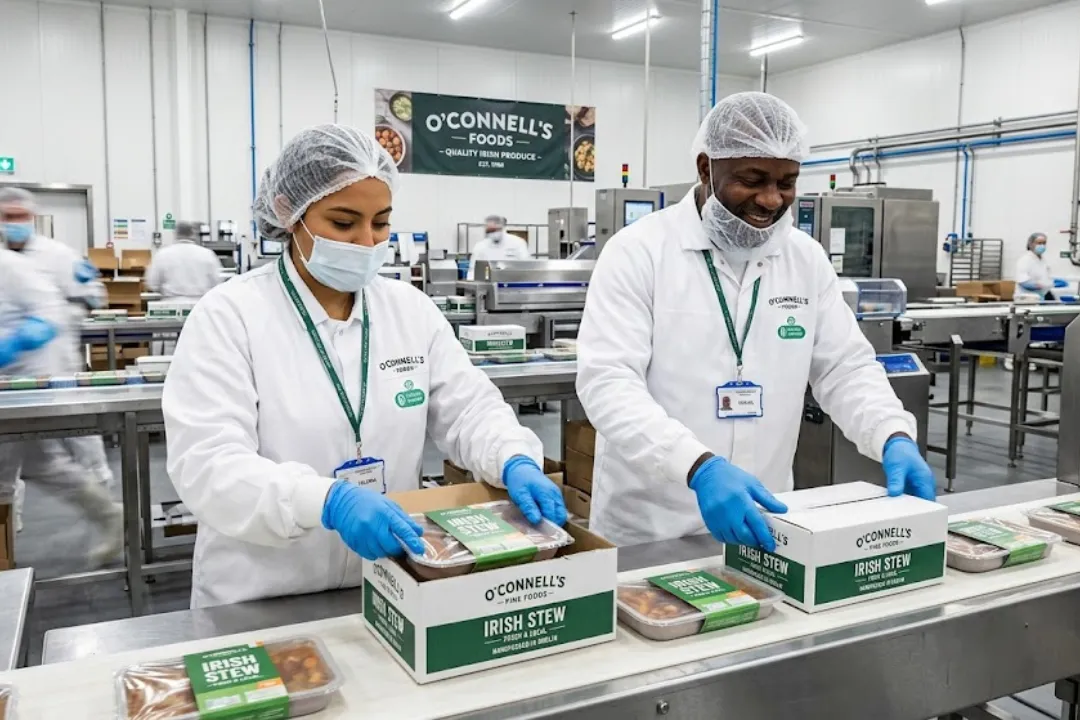
Ireland produces and exports some of the world’s finest food products — from Kerry Group dairy to Glanbia nutrition products to artisan food manufacturers across the country. Behind all of it is a large, hardworking food packing and production workforce, and in 2026 that workforce has more vacancies than it can fill.
Food packing jobs in Ireland are perfect for workers who want to start immediately, have no formal qualifications, and want a stable, full-time income. If that sounds like you, read on — this guide covers exactly what you need to know to apply and succeed.
Why Food Packing Jobs Are Available Right Now
Ireland’s food and drink sector is the country’s largest indigenous industry, valued at over €15 billion. Key drivers of recruitment in 2026:
- Year-round production at major food plants in counties Cork, Limerick, Tipperary, and Cavan
- Expansion of chilled and ready-meal production lines meeting retail demand
- Growth in export-focused food manufacturing (UK, EU, and US markets)
- High staff turnover typical of production environments, creating constant openings
The result is a consistent flow of new vacancies in food packing, production, and quality roles at all experience levels.
Food Packing Worker Salary in Ireland 2026
Pay in the food sector is anchored to Ireland’s national minimum wage and sectoral agreements:
- Food packing operative: €13.50 – €15.50/hour
- Production line worker: €14 – €16/hour
- Quality control checker: €15 – €18/hour
- Machine operator: €16 – €20/hour
- Production supervisor/team lead: €20 – €25/hour
Night premiums (15–20% extra) are standard in 24/7 food production facilities. Weekend working allowances further boost earnings. Full-time contracts at 39–42 hours/week are the norm.
What the Work Involves
Food packing roles vary by employer but typically include:
- Packing finished products into bags, trays, boxes, or cartons on a conveyor line
- Labelling, date-coding, and quality checking packed items
- Operating semi-automatic or automatic packing machinery
- Palletising and wrapping finished goods for despatch
- Maintaining hygiene and food safety standards (HACCP-compliant)
The environment is clean, temperature-controlled, and well-lit. Personal protective equipment (gloves, hairnets, hygiene suits) is always provided.
Visa & Work Permit Information
EU/EEA citizens: No permit needed. Simply register your PPS number.
Non-EEA applicants:
- Food production operative roles often fall below the standard employment permit salary threshold. However:
- Major food companies (Kerry Group, Glanbia, Lakeland Dairies) have established HR pathways for work permit applications for experienced workers at production grade.
- Working Holiday Authorisation users can legally work in food packing.
- After promotion to team leader or machine operator level (€30,000+), a General Employment Permit becomes viable.
- Students on valid Irish study visas can work up to 20 hours/week in food production roles.
How to Apply for Food Packing Jobs in Ireland
- Indeed Ireland: The largest single source. Search “food packing” or “production operative” and your target county.
- Staffing agencies: Osborne Recruitment, Grafton Recruitment, Manpower, and Excel Recruitment all have active food sector divisions.
- Company career pages: Kerry Group (kerrygroup.com/careers), Glanbia (glanbia.com), ABP Food Group, and Dawn Meats post vacancies directly.
- SEAI jobs boards and local employment offices: FÁS/SOLAS work placement programmes sometimes include food industry placements.
- Local newspaper sites and community boards: For smaller regional food producers, local advertising remains common.
Frequently Asked Questions
Q: Do I need any qualifications for food packing jobs in Ireland?
A: No formal qualifications are required for entry-level packing roles. Employers provide HACCP (food safety) and manual handling training. A basic understanding of food hygiene principles is beneficial.
Q: What are working conditions like in Irish food factories?
A: Modern Irish food facilities are well-regulated under Health and Safety Authority (HSA) standards. The environment is clean, temperature-controlled, and hygienic. Repetitive work is common, but rotation between stations helps.
Q: Are food packing shifts flexible?
A: Most large facilities operate rotating continental shifts (e.g., 4 days on, 4 days off, 12-hour shifts). Some offer fixed day shifts. Flexibility varies by employer.
Q: What food companies are the biggest employers in Ireland?
A: Kerry Group, Glanbia, ABP Food Group, Kepak, Dawn Meats, Lakeland Dairies, and Dairygold are among the largest. They collectively employ thousands of production workers across Ireland.
Q: Can food packing work lead to better roles in Ireland?
A: Yes. Many machine operators, quality technicians, and shift supervisors in Irish food companies started on the packing line. Companies like Kerry Group have structured internal development programmes for motivated workers.
Conclusion
Food packing jobs in Ireland in 2026 offer something that’s harder to find than it looks: immediate, no-experience-required employment in a stable, well-regulated industry with genuine scope to grow.
The food industry keeps Ireland (and the world) fed — and the people who do this work deserve recognition for it. If you’re ready to work hard in a clean, professional environment and start building a future in Ireland, the food sector is ready to welcome you. Apply now — the line starts here.
Leave a Reply