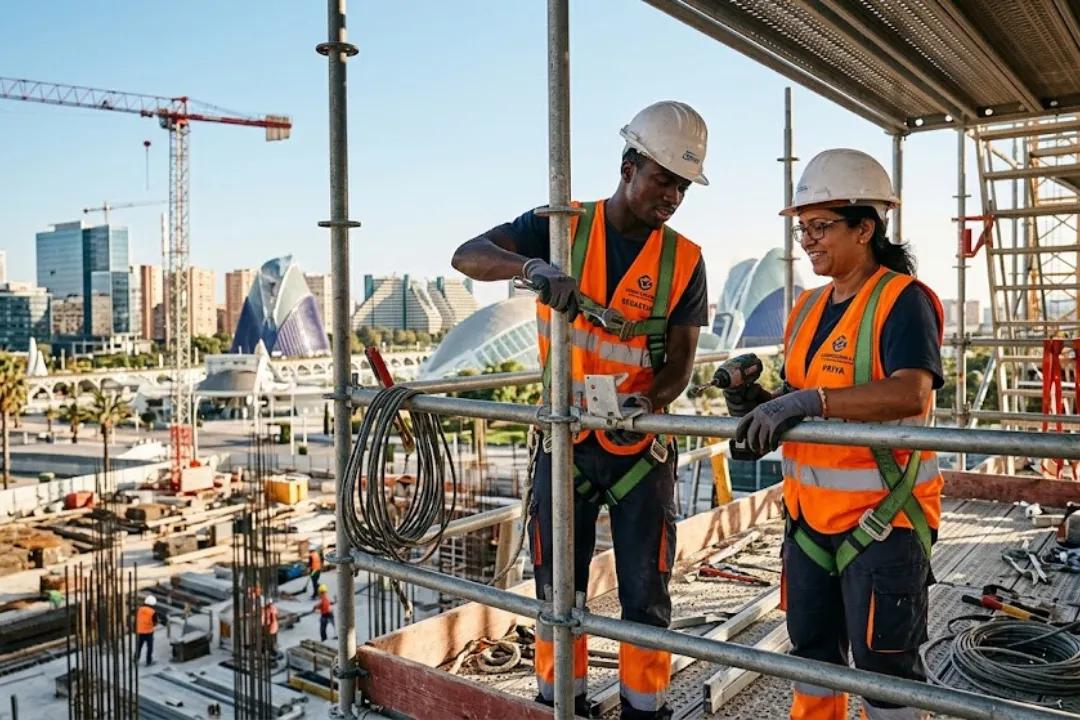
A photorealistic scene of a construction site in a modern Spanish city — a young Black man and a middle-aged South Asian woman in hard hats and orange safety vests working together on scaffolding against a clear blue sky. Busy, professional atmosphere. Real tools visible. Warm natural light, documentary photography style, authentic and energetic.
Spain’s construction sector is in the middle of a major revival. After years of post-recession slowdown, cranes are back on the skyline across Madrid, Barcelona, Valencia, and dozens of smaller cities. And here’s the most exciting part for job seekers: many of these construction sites are actively hiring workers with no prior experience.
Whether you’re looking for construction jobs in Spain as a fresh start, a way into a skilled trade, or a stepping stone to a longer-term career in Europe, 2026 is a genuinely promising time to apply. This guide covers pay, the roles available, visa pathways, and how to land the job.
Spain’s Construction Boom in 2026
Spain’s construction sector grew by nearly 6% in 2024 and continues to expand. Key drivers include:
- Massive government investment in social housing and infrastructure
- EU-funded green building retrofit programmes
- Tourism infrastructure projects (hotels, resorts, airports)
- Private residential development responding to housing demand
The Spanish Construction Confederation (CNC) estimates a need for over 700,000 new construction workers by 2030. Entry-level roles are among the most accessible.
Construction Worker Salaries in Spain 2026
Pay varies by role and experience level:
- General labourer (peón): €1,400 – €1,700/month
- Semi-skilled worker (official de 3ª/2ª): €1,700 – €2,100/month
- Skilled tradesperson (electrician, plumber, welder): €2,200 – €3,000+/month
- Site supervisor / foreman: €2,800 – €3,800/month
Construction pay in Spain is governed by collective bargaining agreements, ensuring legal protections. Overtime, weekend work, and hazard allowances can significantly boost earnings.
Entry-Level Roles That Require No Experience
These positions are open to workers with no formal construction training:
- General labourer: Moving materials, clearing debris, basic site support
- Scaffolding assistant: Assisting with erecting and dismantling scaffolding structures
- Demolition helper: Working alongside demolition teams
- Concrete gang worker: Mixing, pouring, and finishing concrete
- Site cleaner and waste removal: Keeping sites tidy and compliant
Many employers provide on-the-job safety training (which is legally required in Spain). This means you can enter the industry without qualifications and gain marketable skills quickly.
Visa & Work Permit Options
EU/EEA citizens: No work permit needed. Register your residency and get your NIE number.
Non-EU applicants:
- Employer-sponsored work permit: Most common route. Your Spanish employer initiates the process through Spain’s immigration authorities (Secretaría de Estado de Migraciones).
- Construction-specific recruitment programmes: Spain periodically runs sectoral recruitment from specific countries. Check announcements from the SEPE (Spanish Public Employment Service).
- Digital Nomad/Self-employed Visa: Less relevant for construction labourers but applicable to independent contractors.
Processing times for sponsored work permits currently run 2–4 months. Get your documents in order early.
How to Find and Apply for Construction Jobs in Spain
- Spanish job boards: InfoJobs, Indeed.es, Milanuncios (for direct employer ads), and Habitissimo.
- Construction sector recruiters: Randstad Construcción, Adecco Ingeniería, and Eurofirms Building regularly place workers.
- Direct applications to contractors: Large firms like ACS Group, Sacyr, FCC Construcción, and Acciona are always hiring.
- LinkedIn in Spanish: Set your profile to Spanish and search for “peón” or “oficial de obra” for entry-level construction.
- Trade unions and worker centres: The CCOO and UGT unions operate job placement services and can help with rights and contracts.
Frequently Asked Questions
Q: Can I get a construction job in Spain with zero experience?
A: Yes. General labourer and site support roles regularly hire with no experience. You’ll typically receive basic safety induction training on your first day.
Q: Do I need to speak Spanish for construction work?
A: Basic Spanish is helpful but not always essential — many large sites in cities operate with multilingual teams. Over time, learning Spanish will significantly boost your earnings and promotion opportunities.
Q: Are construction jobs in Spain safe?
A: Spain has EU-level health and safety regulations that all construction employers must comply with. Hard hats, hi-vis, and safety inductions are mandatory.
Q: How do I get my construction qualifications recognised in Spain?
A: EU qualifications are generally recognised automatically. Non-EU qualifications may require homologation (formal recognition) through Spain’s Ministry of Education.
Q: What’s the best city for construction jobs in Spain?
A: Madrid and Barcelona have the highest volume of projects. Valencia, Seville, and Málaga (with its booming tourism infrastructure) are also strong markets in 2026.
Conclusion
Construction jobs in Spain in 2026 are a genuine, accessible opportunity — even if you’re starting from zero. The sector is growing, wages are regulated and improving, and entry-level workers are actively needed.
If you have the physical energy, a willingness to learn, and the drive to build a life in one of Europe’s most liveable countries, now is the time. Start with a labourer role, acquire on-the-job skills, and before long you’ll be moving up to better-paid, skilled positions. In construction, you literally build your future one day at a time.