If you’re looking for a realistic, legal, and immediate way to start working in Italy, cleaning jobs in Italy 2026 might be exactly what you need. No university degree, no specialized training, and often no prior professional experience is required. What you do need is reliability, attention to detail, and a genuine willingness to work. Italy’s enormous commercial, hospitality, healthcare, and residential sectors all rely on cleaning professionals — and the demand for these workers continues to grow every year.
In this guide, you’ll learn what cleaning work in Italy actually involves, how much it pays, which visa pathway applies to you, and how to find and apply for positions starting today.
Why Are There So Many Cleaning Job Openings in Italy?
Italy generates massive demand for professional cleaning services across several sectors:
- Tourism: Hotels, restaurants, and tourist sites require daily deep cleaning
- Healthcare: Italian hospitals and care homes have strict EU cleaning standards
- Corporate: Office complexes in Milan, Rome, and Turin outsource all cleaning
- Retail: Shopping malls, supermarkets, and stores need maintenance cleaning
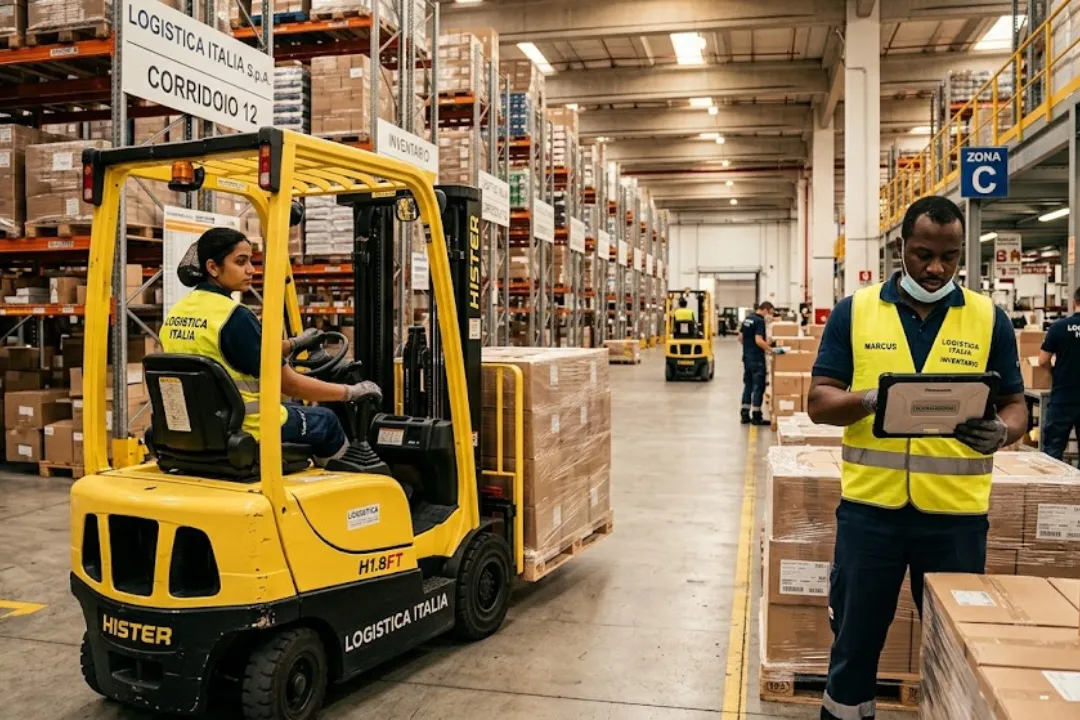
- Industrial: Factories and logistics centers require specialized industrial cleaners
The cleaning and facility services industry in Italy employs over 500,000 workers, making it one of the country’s largest employment sectors. Domestic worker shortages mean foreign workers are consistently needed and welcomed.
Types of Cleaning Jobs in Italy 2026
- Hotel housekeeping: Room cleaning, corridor maintenance, linen changing
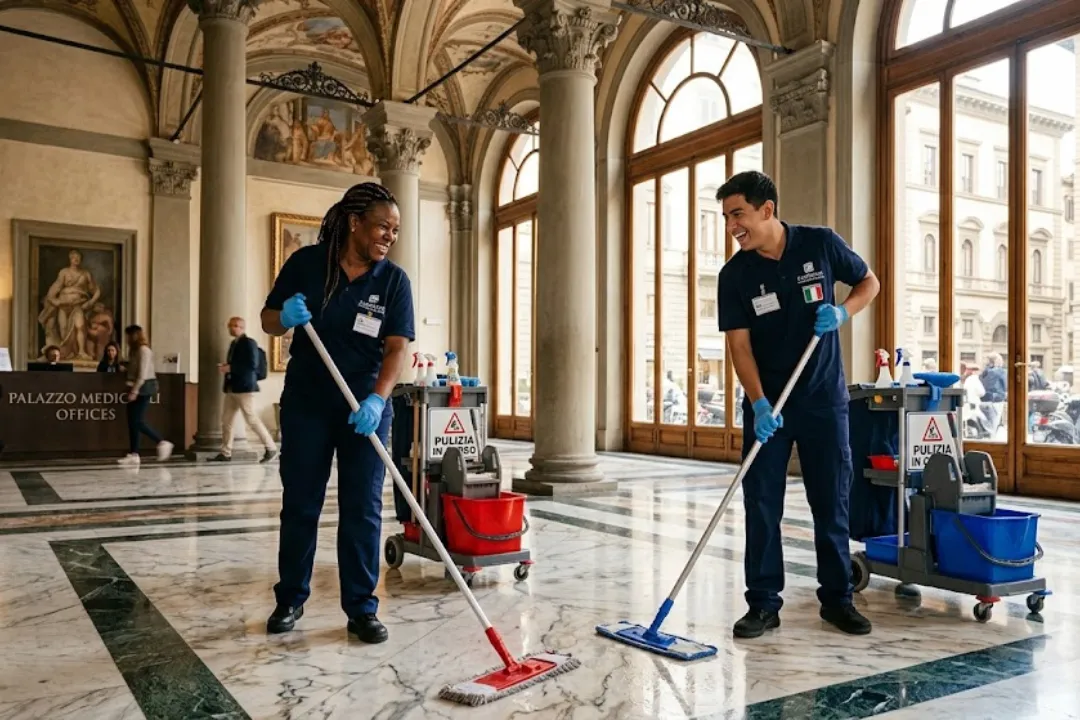
- Office cleaning: Evening/morning commercial cleaning of business premises
- Hospital/healthcare cleaning: Sterile cleaning in medical environments
- School and public building cleaning: Institutional maintenance
- Industrial cleaning: Factory floors, machinery, production areas
- Domestic/home cleaning: Private household cleaning for Italian families
- Specialized cleaning: Window cleaning, deep cleaning, post-construction cleaning
Cleaning Worker Salary in Italy 2026
Cleaning workers in Italy are covered by the CCNL Pulizie Servizi Integrati (Cleaning and Integrated Services Agreement), which sets legally binding minimum wages:
- Part-time cleaning worker (4 hrs/day): €600 – €900/month
- Full-time commercial cleaner (8 hrs/day): €1,100 – €1,500/month
- Hospital / healthcare cleaner: €1,300 – €1,700/month
- Industrial / specialist cleaner: €1,400 – €1,900/month
- Cleaning team supervisor: €1,800 – €2,400/month
Many cleaning workers in Italy hold multiple part-time contracts simultaneously (a common Italian practice called ‘multi-committenza’), which can bring total monthly income up to €1,800–€2,200 for full working weeks.
From Pakistan to Palermo: A Cleaner’s Story
Rashida, 34, from Pakistan, arrived in Italy in 2021 as a hotel room attendant in Palermo. Her Italian language skills were minimal, but her work ethic was exceptional. Within a year, her employer promoted her to housekeeping supervisor, overseeing a team of eight. She enrolled in an evening Italian language course, obtained a food hygiene certificate, and is now pursuing a qualification in facility management. ‘People underestimate cleaning work,’ she says. ‘But in Italy, if you’re good at your job, people notice and doors open.’
Italy Work Visa for Cleaning Workers 2026
Domestic and Cleaning Worker Quota – Decreto Flussi
Italy’s annual Decreto Flussi includes a specific quota for domestic workers and cleaning professionals — one of the most accessible and consistently available visa pathways for non-EU nationals. Required steps:
- Find an Italian employer (individual household or cleaning company) willing to sponsor you
- Employer files a nulla osta (hiring authorization) with the local immigration office
- You apply for a work visa at the Italian consulate in your country
- Arrive in Italy and register for a permesso di soggiorno within 8 days of arrival
Domestic Worker Visa (Colf e Badante)
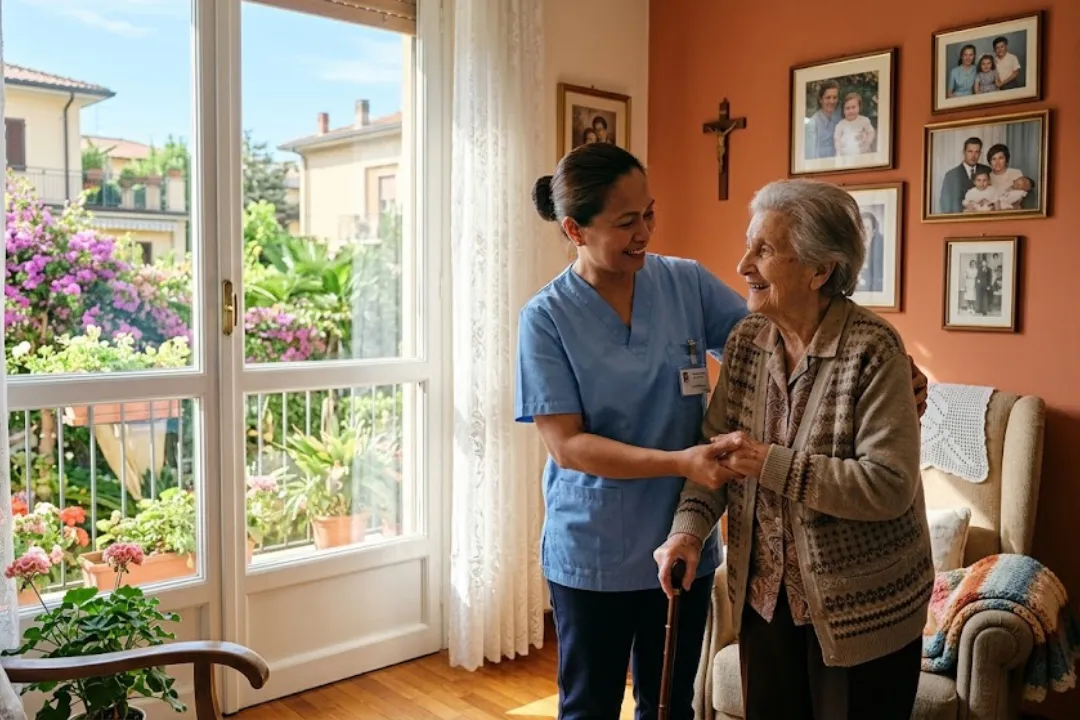
Italy has a dedicated legal category for home cleaners (colf) and caregivers, making it one of the most straightforward visa pathways available. Hundreds of thousands of domestic worker permits have been issued in Italy over the past decade.
How to Apply for Cleaning Jobs in Italy 2026
- Prepare a simple CV — even without formal experience, list any related work
- Obtain a basic hygiene/safety certificate if targeting healthcare or food environments
- Search on: Subito.it, Bakeca.it, InfoJobs.it (reliable for local cleaning jobs)
- Contact cleaning service companies: ISS Italy, Sodexo Italia, Dussmann, Coopservice
- Register with domestic worker agencies: Badacare, AssoColf, ColfService
- Use community networks: Italian parish organizations and immigrant associations often post cleaning roles
Frequently Asked Questions
Q: Do I need any qualifications to do cleaning work in Italy?
A: No formal qualifications are required for most roles. Healthcare cleaning may require a basic hygiene certificate, which can be obtained through a short course. Your employer will often provide on-the-job training.
Q: Is cleaning work in Italy full-time or part-time?
A: Both. Full-time positions are common in hotels, hospitals, and commercial offices. Many domestic and private household positions are part-time but can be combined for full-time income.
Q: Can a cleaning job in Italy lead to a permanent visa?
A: Yes. The domestic worker visa is renewable, and after 5 years of legal residence in Italy, you can apply for long-term EU residence (permesso di soggiorno CE). Many domestic workers eventually obtain Italian citizenship.
Q: How do I find a private household that needs a cleaner in Italy?
A: Online platforms like Subito.it, Bakeca.it, and TaskRabbit Italy list private household cleaning requests. Domestic worker agencies also match workers with Italian families.
Q: Is cleaning work in Italy physically demanding?
A: It can be. Commercial and industrial cleaning requires physical stamina, bending, and standing for extended periods. Proper equipment is provided, and EU health and safety regulations require ergonomic working practices.
Your Worth Is Not Defined by Your Job Title
We want to say something directly to you, because we think you need to hear it: cleaning is real work. It is skilled, necessary, and valuable work. In Italy — a country that takes pride in beautiful spaces, immaculate hotels, and clean piazzas — the people who keep things clean are genuinely respected and protected by strong labor laws.
If you’re starting here because it’s the most accessible path — that’s wisdom, not compromise. Every great Italian immigrant story started somewhere. Some started in a vineyard, others in a factory, others with a mop in a Milan office building at 6am. Where you start is not where you’ll end up. Italy rewards those who show up.
Conclusion
Cleaning jobs in Italy 2026 offer one of the most accessible pathways to legal work and residency in Europe. With no experience required, regulated wages under national collective agreements, a dedicated visa quota for domestic and cleaning workers, and opportunities in every Italian city and region, this is a genuinely viable route to a better life. Prepare your documents, reach out to employers and agencies, and apply today — your Italian story starts with the first step.