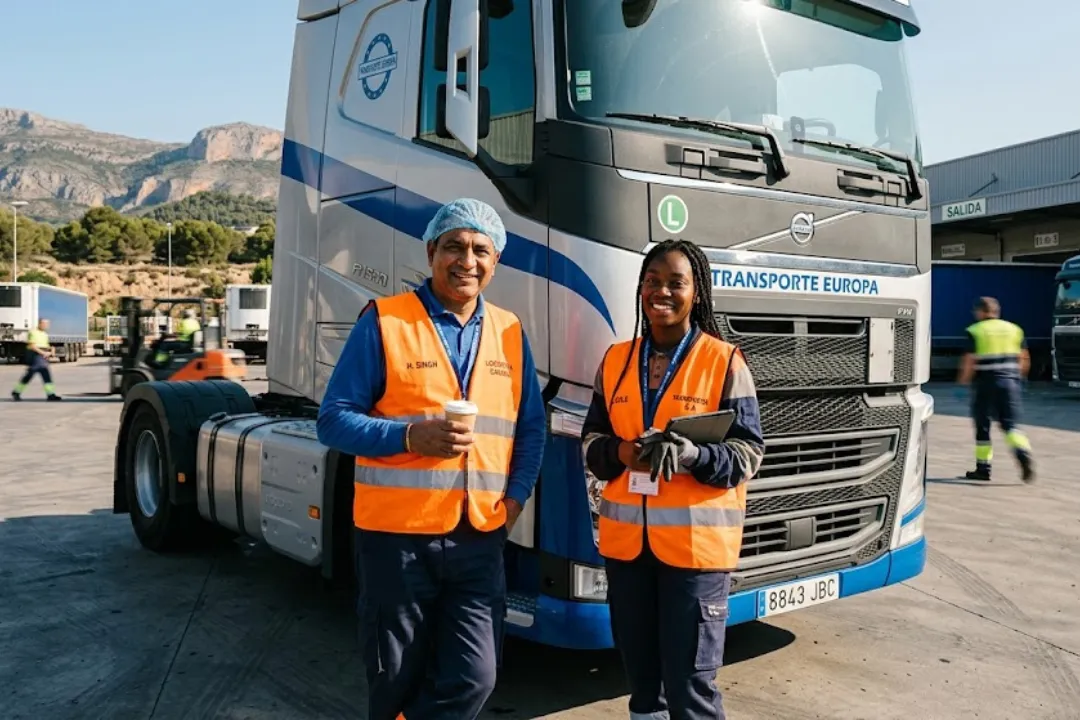
Spain’s roads never sleep. From the sun-soaked highways of Andalusia to the industrial corridors of Catalonia, thousands of trucks move goods every single day — and right now, Spain is desperately short of the drivers to keep them rolling. If you’ve ever dreamed of a well-paying job abroad with a clear visa pathway, truck driver jobs in Spain in 2026 could be your golden ticket.
Whether you’re an experienced HGV driver looking to relocate or someone ready to get licensed and start fresh, this guide breaks down everything you need — salary expectations, the license requirements, visa options, and exactly how to land a job.
Why Spain Needs Truck Drivers Right Now
Spain is one of the EU’s biggest economies, and its logistics sector is booming. The country faces a shortage of over 15,000 professional truck drivers, according to industry estimates. This gap is being driven by an ageing workforce and increased cross-border freight demand following Spain’s post-pandemic trade recovery.
The result? Employers are now actively recruiting internationally, offering competitive wages, visa sponsorship, and in many cases, relocation assistance. For foreign workers, this is a rare open door into a well-regulated, high-demand profession.
Truck Driver Salary in Spain 2026
Average Earnings
Truck driver salaries in Spain vary by experience, route type, and employer, but here’s a realistic picture for 2026:
- Entry-level drivers (local/regional routes): €1,800 – €2,200/month
- Experienced long-haul drivers: €2,400 – €3,200/month
- International route drivers (cross-border EU): €3,000 – €4,000+/month
Many positions also include bonuses for on-time delivery, night allowances, and meal subsidies. Some employers provide accommodation for the first few months, reducing your living costs significantly.
Real-World Example
Ahmed, a 34-year-old driver from Morocco, secured a long-haul truck driver job in Valencia in early 2025 through a logistics recruitment agency. Within six months, he was earning €2,800/month including night bonuses, and his employer sponsored his Spanish work permit. “The paperwork was a lot,” he says, “but once I was here, the job was steady and the pay was honest.”
License Requirements for Truck Drivers in Spain
To drive a truck in Spain professionally, you’ll need the right category of driving licence:
- Category C: Required for trucks over 3.5 tonnes (rigid trucks)
- Category C+E: Required for articulated lorries and full trailer combinations
- CPC (Certificate of Professional Competence): This is a legal requirement across the EU for all professional truck drivers. It involves 35 hours of periodic training every 5 years.
If you already hold an HGV licence from a non-EU country, you may be required to pass a Spanish conversion exam or take a short practical test. Some EU and EEA licences are recognised directly under mutual recognition agreements.
Visa & Work Permit Options for 2026
EU/EEA Citizens
If you’re an EU or EEA national, you have the right to work in Spain freely. Simply register your residency (empadronamiento) and obtain a NIE number (tax identification number). No work permit required.
Non-EU Applicants
For workers from outside the EU — including Pakistan, India, Morocco, the Philippines, and Latin American nations — here’s how to get in:
- Employer-sponsored work visa: Your employer applies to Spanish authorities for a work permit on your behalf. This is the most common route.
- Spain’s International Talent Visa: Less common for drivers but applicable if you have specialised logistics qualifications.
- EU Blue Card: For highly skilled workers — less relevant for standard driver roles.
The key is finding an employer willing to sponsor your visa. Many logistics companies in Spain now have established recruitment pipelines for international hires, particularly from Latin America and North Africa.
How to Apply for Truck Driver Jobs in Spain
Here’s a step-by-step approach to maximise your chances:
- Get your licence in order: Ensure your Category C/C+E and CPC are valid before applying. Some employers will help with conversion costs.
- Build a Spanish CV (curriculum vitae): Spanish employers prefer a concise, 1–2 page CV in Spanish. Highlight your kilometres driven, cargo types, and any safety record.
- Use the right job boards: Key platforms include InfoJobs (Spain’s largest), Indeed Spain, Manpower España, Adecco, and specialist logistics recruiters like XPO Logistics, DB Schenker, and Gefco.
- Contact recruitment agencies: Agencies specialising in international placements often have direct relationships with Spanish logistics companies.
- Apply directly to logistics companies: Major employers actively hiring in 2026 include Correos Express, Seur, MRW, DHL Spain, and regional cooperatives.
- Prepare for a practical assessment: Many employers will ask you to complete a driving test on their fleet. Be ready.
Frequently Asked Questions
Q: Do I need to speak Spanish to get a truck driver job in Spain?
A: Basic Spanish is highly recommended, especially for safety communications and dealing with clients. Many logistics companies have bilingual supervisors, but Spanish proficiency improves your chances significantly.
Q: Can I get a truck driver job in Spain without experience?
A: Most positions require at least 1–2 years of professional driving experience. However, some logistics companies offer trainee programmes for drivers who have their Category C licence but limited hours.
Q: How long does visa sponsorship take for Spain?
A: Typically 2–4 months from the time your employer submits the application. Spain’s immigration system has been streamlining international work permits as of 2024–2025.
Q: Is truck driving in Spain physically demanding?
A: Long-haul routes can be tiring, but Spain has strong EU labour regulations governing maximum driving hours (EU tachograph rules apply). Drivers are legally entitled to regular rest breaks.
Q: What is the job market like for truck drivers in Spain in 2026?
A: The market is highly favourable for qualified drivers. With a national shortage and growing e-commerce demand, qualified drivers are being actively recruited both domestically and internationally.
Conclusion
Truck driver jobs in Spain in 2026 represent one of the most accessible pathways into stable, well-paid employment in Europe. The demand is real, the salaries are competitive, and the door is genuinely open for qualified international applicants.
Yes, navigating the licence conversion and visa process takes effort — but thousands of drivers have done it before you. If you’ve got the wheel skills and the determination, Spain has a seat waiting for you. Start gathering your documents, polish that CV, and get applying. The open road awaits.