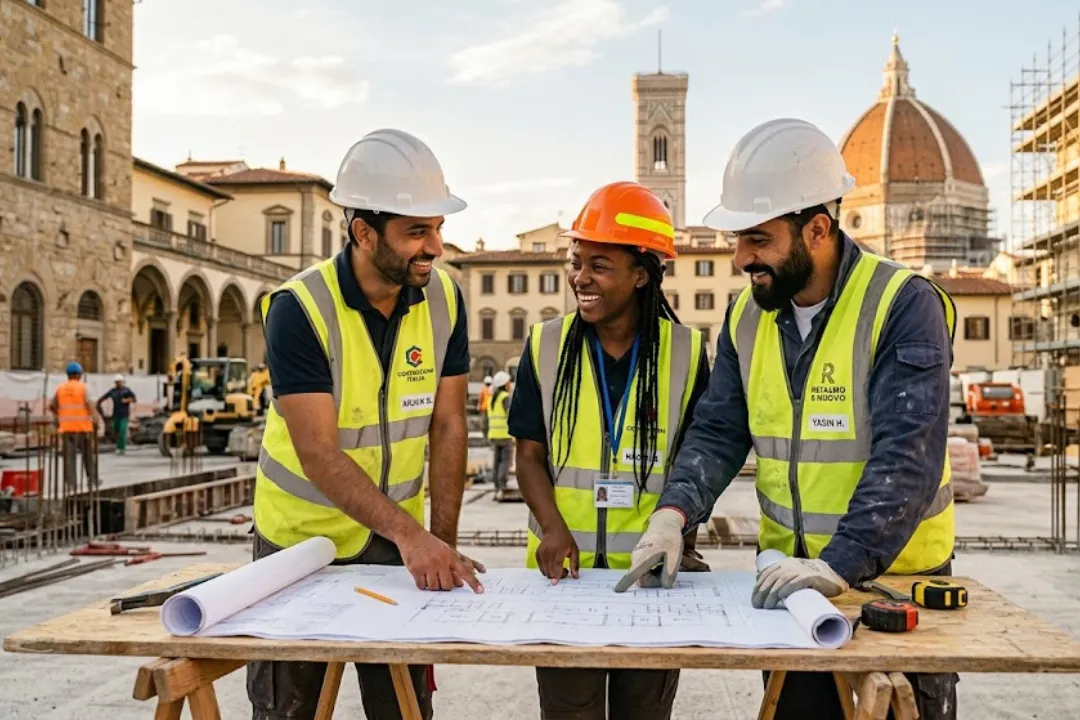
If you’ve been searching for construction jobs in Italy 2026, you’re already one step ahead of thousands of other job seekers around the world. Italy’s booming infrastructure sector, backed by EU funding and national recovery programs, is creating tens of thousands of positions — and the best part? Many of these roles require little to no prior experience. Whether you’re a fresh graduate, a career switcher, or simply someone looking for a better life abroad, Italy’s construction industry could be your gateway.
In this guide, we’ll walk you through everything you need to know — from average salaries and visa options to the exact steps for applying today. Let’s get into it.
Italy’s Construction Boom: What’s Driving It in 2026?
Italy has been investing heavily in rebuilding and modernizing its infrastructure. The Italian government, with support from the EU’s NextGenerationEU fund, has allocated billions of euros to projects including highways, railways, social housing, and renewable energy installations.
This means one thing for foreign workers: demand is high, and employers are actively recruiting internationally. Cities like Milan, Rome, Turin, and Naples are all seeing massive construction activity, and smaller regions are following suit.
- Highway and rail expansion projects across northern Italy
- Earthquake-resistant building renovations in central Italy
- Green building and solar installation projects nationwide
- Social housing development funded by EU recovery grants
Construction Worker Salary in Italy 2026
One of the first questions people ask is: how much can I actually earn? Here’s a realistic breakdown for foreign workers entering the Italian construction market:
- Entry-level / no experience: €1,200 – €1,600 per month
- Semi-skilled workers (1–3 years experience): €1,600 – €2,200 per month
- Skilled tradespeople (electricians, plumbers, welders): €2,200 – €3,200 per month
- Foremen / site supervisors: €2,800 – €4,000+ per month
Many employers also provide accommodation and meal allowances, which significantly boosts your effective income. Some contracts include free housing, transportation to the site, and even health insurance — especially for workers on longer-term projects.
Do You Need Experience to Get a Construction Job in Italy?
Here’s the good news that most job boards won’t tell you: the majority of entry-level construction roles in Italy do NOT require formal experience. Positions such as general laborer, site cleaner, material handler, and construction helper are widely available for people with zero professional background.
What employers typically look for:
- Physical fitness and willingness to do manual work
- Basic understanding of safety procedures (training is usually provided)
- Reliability and punctuality
- Basic Italian or English communication skills (varies by employer)
Take the story of Marco, a 28-year-old from Nigeria who arrived in Italy in 2023 with no construction background. He started as a site helper in Turin, earned his forklift operator certification within six months, and was promoted to equipment operator — doubling his salary. His secret? Showing up every day, learning fast, and asking questions. Italy rewards dedication.
Italy Work Visa for Construction Workers 2026
Seasonal Work Permit (Decreto Flussi)
Italy’s Decreto Flussi (Flow Decree) is the main visa pathway for non-EU construction workers. Each year, the Italian government announces a quota of work permits for non-EU nationals. In recent years, hundreds of thousands of entries have been approved, with construction being one of the top sectors.
- Application opens annually (typically early in the year)
- Requires a job offer from an Italian employer
- The employer sponsors and files the application on your behalf
- Processing time: 2–4 months on average
EU Blue Card
For skilled construction workers with higher qualifications, the EU Blue Card offers a longer-term work and residence permit with more rights and benefits. It requires a higher salary threshold and formal qualifications, but it’s the best pathway for those looking to settle long-term in Italy.
How to Find and Apply for Construction Jobs in Italy 2026
Step 1: Prepare Your Documents
- Valid passport (at least 12 months validity)
- Updated CV in Italian or English (Europass format preferred)
- Any certifications (forklift, safety training, welding, etc.)
- Reference letters from previous employers (if available)
Step 2: Search on Reliable Job Platforms
- InfoJobs.it – Italy’s largest job portal
- Indeed.it – Wide range of construction listings
- Subito.it – Good for regional construction roles
- LinkedIn – Ideal for skilled and supervisory roles
- ANPAL (National Agency for Active Labour Policies) – Official government portal
Step 3: Apply Through Recruitment Agencies
Several Italy-based and international recruitment agencies specialize in placing foreign workers in construction roles. Look for agencies registered with the Italian Ministry of Labour. Agencies like Adecco Italy, Manpower Italy, and Synergie Italia regularly recruit for construction positions.
Step 4: Wait for Visa Approval & Prepare to Travel
Once you receive a job offer and your employer files the visa application, you’ll be notified for an interview at the Italian consulate in your home country. Prepare your documents, attend the interview, and once approved, you can travel to Italy to begin work.
Frequently Asked Questions
Q: Can I get a construction job in Italy without speaking Italian?
A: Yes, many construction sites in larger cities have multilingual supervisors, and employers in high-demand areas often hire English-speaking workers. Learning basic Italian phrases will still give you a significant advantage.
Q: How long does it take to get a work visa for Italy?
A: Typically 2–4 months from the date of application. The Decreto Flussi window is limited, so it’s important to apply as soon as the quota opens each year.
Q: Are there construction jobs in Italy with free accommodation?
A: Yes, many employers — especially for project-based work in remote areas — provide free or subsidized accommodation. Always confirm this in your employment contract before signing.
Q: What is the minimum age to work in construction in Italy?
A: The minimum working age in Italy is 16, though most construction employers prefer workers aged 18 and above for safety and insurance reasons.
Q: Can my family join me if I get a construction job in Italy?
A: Yes. Once you’ve been in Italy for at least one year on a work permit, you can apply for family reunification (ricongiungimento familiare) to bring your spouse and children.
A Warm Word Before You Apply
We know that making the decision to leave home and work abroad isn’t easy. It takes courage, sacrifice, and a whole lot of hope. If you’re reading this, you’re already showing the determination that employers in Italy are looking for. The construction industry rewards those who show up, work hard, and keep learning — regardless of where they started.
Italy is a country with a rich culture, world-class food, and a genuine appreciation for hard work. Thousands of foreign workers before you have built new lives there — not just buildings. Your 2026 could be the year everything changes. Start with one application, one email, one phone call. That’s all it takes.
Conclusion
Construction jobs in Italy 2026 represent one of the most accessible and rewarding opportunities available to foreign workers today. With competitive salaries starting from €1,200/month, no experience required for entry-level roles, and a clear visa pathway through the Decreto Flussi system, there’s never been a better time to apply. Research employers, prepare your CV, and take that first step toward a life-changing career in Italy. Buona fortuna — good luck!